Source eco friendly easy release ice cube tray for bars, parties, and home use
Compare 30 listings for an eco friendly easy release ice cube tray from verified Chinese suppliers. Buyers can evaluate material, certifications, and customization options to find the right fit for their needs.
Key considerations
Products List




Comprehensive Sourcing Guide
Sourcing Guide for Eco-Friendly Easy Release Ice Cube Trays
Understanding Material Composition and Release Mechanics
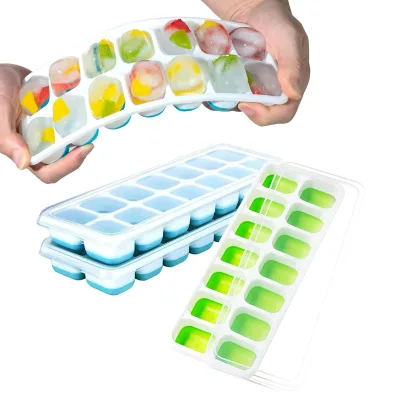
When sourcing eco-friendly ice cube trays, the primary focus must be on the material composition, as this dictates both the environmental profile and the functional "easy release" capability. The supplied product data confirms that Silicon and Silicone are the dominant materials observed in the current market listings. These terms are often used interchangeably in procurement contexts, referring to synthetic rubber polymers derived from silicon, oxygen, carbon, and hydrogen. Unlike traditional rigid plastics, silicone offers a flexible molecular structure that is essential for the "easy release" feature. This flexibility allows the tray to be twisted or bent, breaking the vacuum seal between the frozen water and the mold surface without requiring force that might crack the ice or damage the tray.
The "eco-friendly" designation in this context is largely tied to the durability and reusability of the material. The observed product attributes explicitly list Function: Reuseable, which is a critical differentiator from single-use plastic alternatives. A high-quality silicone tray can withstand thousands of freeze-thaw cycles without degrading, leaching, or losing its shape. The supplied facts indicate that products are available in various configurations, such as Rectangular shapes (e.g., model Ice Cube Tray-028J) and Spherical shapes (e.g., model Silicone Ice Cube Trays-095G). The "easy release" performance is further influenced by the surface texture and the specific formulation of the silicone. While the data notes a Feature: Distorted for some spherical trays, buyers should verify that the distortion is intentional for aesthetic purposes and does not compromise the structural integrity required for easy demolding. The material must be food-grade to ensure safety, a requirement supported by the presence of FDA and LFGB certifications in the product list.
Compliance, Certification, and Safety Standards
For B2B procurement, verifying compliance is not merely a formality but a critical risk management step. The supplied product facts highlight a robust array of certifications that buyers should expect to see on product datasheets and test reports. The most frequently observed certifications include FDA, LFGB, CE/EU, EEC, and CIQ. These standards cover food contact safety, ensuring that the silicone does not leach harmful substances into the ice or beverages.
Specifically, FDA compliance indicates adherence to United States Food and Drug Administration regulations for food contact substances. LFGB (Lebensmittel- und Futtermittelgesetzbuch) represents the German Food and Feed Code, which is often considered more stringent than FDA regarding migration limits and sensory testing. The presence of CE/EU and EEC marks suggests compliance with European Union safety, health, and environmental protection requirements. Additionally, some listings mention IATF16949, ISO, Reach, RoHS, MSDS, and F D a. While IATF16949 is primarily an automotive quality management standard, its presence alongside food certifications may indicate a supplier with rigorous quality control systems that extend to their food-grade product lines. Reach and RoHS are crucial for environmental compliance, restricting the use of hazardous substances.
Buyers must verify that the Ethylene Oxide Sterilization status is clearly defined. The data explicitly notes Without Ethylene Oxide Sterilization for certain models. This is a positive attribute for food-grade silicone, as ethylene oxide is a carcinogen and its absence reduces the risk of chemical residue. However, buyers should confirm that the manufacturing process includes appropriate cleaning and sanitation steps to meet hygiene standards without relying on ethylene oxide. The Standard field in the data shows values like customized and OEM, indicating that while baseline standards exist, specific regulatory requirements for target markets (e.g., Japan's Food Sanitation Law or Canada's Health Canada regulations) may need to be negotiated as part of the customization process.
Cost Drivers and Minimum Order Quantity Analysis
The economics of sourcing silicone ice cube trays are driven by material costs, mold complexity, and order volume. The observed MOQ (Minimum Order Quantity) range in the market data is significant, spanning from 1 to 5300 units. This wide variance suggests a market segmented between sample buyers, small boutique brands, and large-scale distributors. For instance, model SYF-0141 has an MOQ of 400 PCS, while model SYF-095G requires 5300 PCS. Conversely, some items like NWRP have an MOQ as low as 50 PCS.
The Observed listed price range in USD is 0.17-340.01. This extreme range is likely due to the inclusion of different packaging types and order volumes. A unit price of $0.17 typically corresponds to bulk orders of simple, rectangular trays with minimal packaging. The higher end of the price spectrum ($340.01) likely represents a complete set, a specialized custom mold, or a small batch with premium packaging. The prod_packing attribute varies from Each Packed in a Polybag to Box or Pack in Bulk, Poly Bag with Carton Box. Packaging choices significantly impact the final landed cost. A single polybag is cost-effective for high-volume shipments, whereas individual boxes add substantial material and labor costs but enhance retail presentation.
Buyers should note that Customization is available, which is a major cost driver. Custom molds, logos, and specific shapes (like the Creative Styling or Fruit designs mentioned) require upfront tooling fees and higher MOQs to amortize these costs. The Service attribute lists OEM/ODM/Obm, Custom Logo / Packaging, and 3D Design, all of which add to the unit price. When evaluating cost, buyers must look beyond the unit price to the total cost of ownership, including shipping, duties, and the potential for waste if the MOQ is too high for the initial market test.
Technical Specifications and Design Variations
Technical specifications for ice cube trays extend beyond simple dimensions to include shape, size, and design intent. The data reveals a diverse product catalog. The prod_model field lists specific identifiers such as Ice Cube Tray-028J, Silicone Ice Cube Trays-095G, SYF-0137, SYF-0146, SYF-0141, and NWRP. These models correspond to distinct physical attributes.
| Product Model | Shape | Size | Color | Design Style | Packing |
|---|---|---|---|---|---|
| Ice Cube Tray-028J | Rectangular | Medium | Red | Fruit or Customized | Polybag |
| Silicone Ice Cube Trays-095G | Spherical | Large | N/A | Distorted | Single |
| SYF-0137 | N/A | N/A | N/A | Customized | Box |
| SYF-0141 | N/A | N/A | N/A | N/A | N/A |
| NWRP | Creative Styling | N/A | N/A | Western | Bulk/Poly Bag |
The Shape attribute ranges from standard Rectangular to Spherical and Creative Styling. The Size is categorized as Medium or Large, which affects the volume of ice produced and the tray's footprint in a freezer. The Color is observed as Red, but given the Customization availability, a wide spectrum of colors is likely achievable. The Design options include Fruit motifs or fully Customized patterns, allowing for branding opportunities.
The Type of product varies, with some listings classified as Cake Mold or Decoration, suggesting that these silicone trays are multi-functional. This versatility is a key selling point for eco-friendly products, as a single tray can be used for ice, frozen desserts, or decorative elements. The Style is noted as Classic or Western, indicating a preference for timeless designs over fleeting trends, which aligns with the durable nature of silicone. Buyers should ensure that the Drawing Format provided by the supplier (e.g., .STP, .Step, .Igs, .Stl, .Dwg, .Pdf) is compatible with their internal design and manufacturing software if they plan to modify the product.
Supplier Evaluation and Service Capabilities
Evaluating a supplier for eco-friendly silicone products requires a deep dive into their service capabilities and operational transparency. The supplied data indicates that suppliers offer comprehensive OEM/ODM services, including Custom Logo / Packaging and 3D Design. This suggests that suppliers are equipped to handle private label requests and custom engineering. The Service attribute explicitly mentions OEM/ODM/Obm, highlighting flexibility in business models.
The Lead Time is a critical factor in supply chain planning. The data specifies a Lead Time of 10-20 Days for production, with a Sample Time of 3-7 Days. These timelines are relatively standard for silicone molding but can vary based on the complexity of the mold and the current order volume. Buyers should verify if these lead times include the time for mold creation or if they apply only to production after the mold is approved. The Origin of the products is consistently listed as China, with specific mentions of Zhejiang, China. Zhejiang is a known manufacturing hub for silicone products, but buyers should verify the specific factory location to assess logistics and potential supply chain risks.
The Group attribute is listed as Universal, which may imply that the products are suitable for a wide range of applications or that the supplier serves a diverse client base. However, buyers should look for evidence of specific industry experience, such as the IATF16949 certification, which, while automotive-focused, indicates a high level of process control. The Processing Service is identified as Moulding, which is the standard method for creating silicone trays. Buyers should request details on the molding process (e.g., injection molding vs. compression molding) as this affects the final product's density and release properties.
Quality Control and Long-Term Procurement Strategy
Ensuring consistent quality in silicone ice cube trays requires a robust quality control (QC) strategy. The Feature: Distorted and Quality: High attributes suggest that some products are designed with specific textural or aesthetic qualities that must be maintained. QC checks should focus on the Easy Release performance, ensuring that the silicone does not stick to the ice even after repeated use. This involves testing the flexibility and elasticity of the material.
Buyers should verify the Certificate details, ensuring they are current and issued by accredited bodies. The presence of MSDS (Material Safety Data Sheet) is essential for handling and shipping safety. RoHS and Reach compliance checks are necessary to ensure the product does not contain restricted substances. The Standard field shows customized and OEM, meaning that buyers should define their own quality standards in the contract, including acceptable defect rates and tolerance levels for dimensions.
For long-term procurement, the Reusable nature of the product is a key sustainability metric. Buyers should assess the expected lifespan of the trays and the supplier's warranty or replacement policies. The Logo Printing attribute notes Without Logo Printing for some models, while others offer Customized logos. This distinction is important for branding strategies; buyers must confirm if the logo printing is permanent (e.g., molding) or surface-applied (e.g., screen printing), as the latter may wear off over time.
The Drawing Format availability (e.g., .STP, .Step) is crucial for long-term maintenance. If a buyer needs to replace a tray or modify the design in the future, having the original CAD files ensures continuity. The Sample Time of 3-7 Days allows for rapid prototyping and testing, which is vital for validating the "easy release" claim before committing to a large order. Finally, buyers should consider the Packaging sustainability. While Polybag and Carton Box are standard, eco-conscious buyers may request biodegradable or recycled packaging options to align with the "eco-friendly" product positioning.
Strategic Sourcing Considerations and Market Alignment
Aligning the procurement strategy with the "eco-friendly" and "easy release" core keywords requires a holistic view of the product lifecycle. The market data shows a clear trend toward customization and versatility, with products serving as both ice cube trays and cake molds. This multi-functionality enhances the value proposition for end-users, reducing the need for multiple kitchen tools and thus supporting sustainability goals.
Buyers should prioritize suppliers who demonstrate transparency in their Origin and Certification processes. The consistent listing of China as the origin suggests a mature supply chain, but buyers must ensure that the specific factories adhere to ethical labor practices and environmental regulations. The MOQ flexibility, ranging from 50 to 5300, allows buyers to start small and scale up, reducing financial risk. However, the Price variance indicates that economies of scale are significant; buyers should plan their order volumes carefully to optimize costs without overstocking.
The Design options, including Fruit and Creative Styling, offer opportunities for differentiation in a crowded market. Buyers should leverage the 3D Design services to create unique shapes that stand out. The Style being Classic or Western suggests a broad appeal, but buyers should validate these preferences with their target demographic. Finally, the Lead Time of 10-20 Days allows for agile inventory management, but buyers should build in buffer time for potential delays, especially when dealing with custom molds or high-volume orders. By focusing on material quality, certification compliance, and supplier flexibility, buyers can successfully source eco-friendly, easy-release ice cube trays that meet both functional and sustainability requirements.
FAQs
What material is used for eco friendly easy release ice cube trays?
Silicone is the primary material used for these trays, offering flexibility for easy release. This synthetic rubber polymer allows twisting to break the vacuum seal without damaging the ice or tray, ensuring durability over thousands of freeze-thaw cycles.
Which certifications ensure food safety for silicone ice cube trays?
Products typically carry FDA, LFGB, CE/EU, EEC, and CIQ certifications to verify food contact safety. These standards confirm the material does not leach harmful substances, with some listings also including IATF16949, Reach, and RoHS for broader compliance.
Can I customize the shape and logo on these silicone trays?
Yes, customization is available for shapes like rectangular, spherical, or fruit designs, along with custom logos. Suppliers offer OEM and ODM services including 3D design, allowing buyers to specify unique molds and packaging styles to match their brand requirements.
What is the typical minimum order quantity for silicone ice cube trays?
Minimum order quantities vary significantly, ranging from 50 pieces for small batches to 5300 pieces for large production runs. Specific models like SYF-0141 require 400 pieces, while others may start at 1000 units depending on the customization level and supplier.
How long does it take to receive samples and bulk orders?
Sample production typically takes 3 to 7 days, while bulk lead times range from 10 to 20 days. These timelines apply to standard silicone molding processes, though complex custom molds or specific packaging requirements may extend the delivery schedule.
Are these trays sterilized with ethylene oxide before shipping?
Many products are explicitly listed as without ethylene oxide sterilization to avoid chemical residues. This is a positive attribute for food-grade silicone, ensuring safety without relying on carcinogenic gases, though manufacturers should confirm hygiene standards through other cleaning methods.
Where are the main manufacturing locations for these silicone trays?
The majority of products originate from China, with specific manufacturing hubs noted in Zhejiang. This region is a known center for silicone production, offering a wide range of suppliers capable of handling both standard and customized ice cube tray orders.